
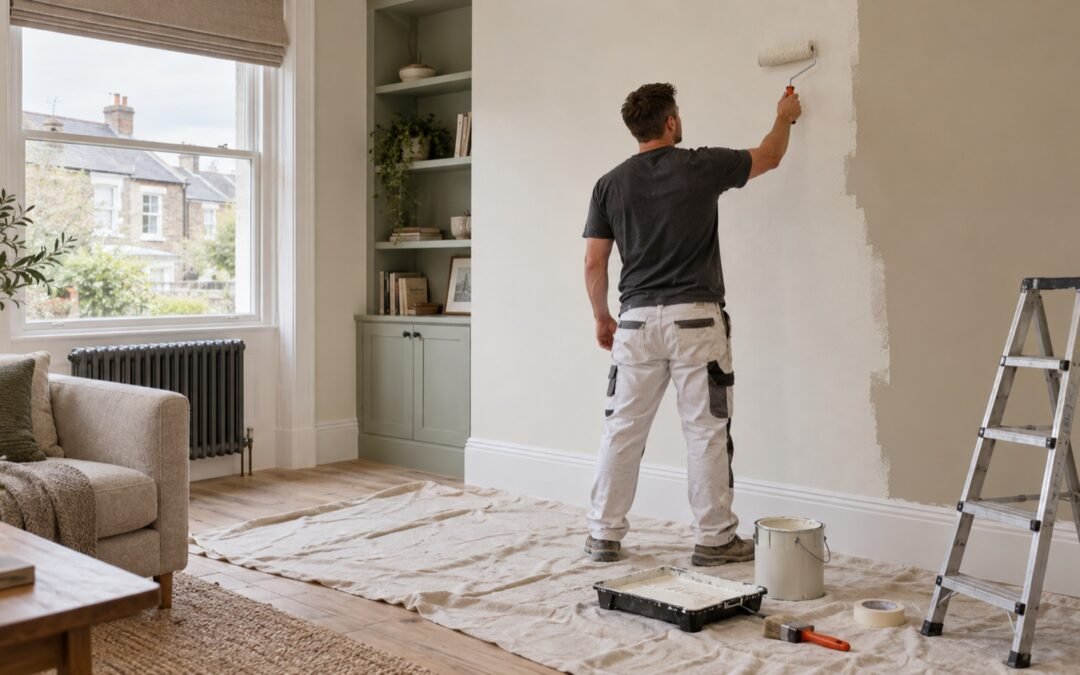
How much does painting and decorating cost in the UK? A straightforward room commonly costs a few hundred pounds to paint professionally, while a whole property can run into several thousand. The useful question is not simply “how much per room?” but what preparation, surfaces, paint and finishing the quotation actually includes.
For early 2026 planning, allow roughly £350 for a small room, £450 for a typical medium room and up to £1,000 for a large room when ordinary trade paint and professional labour are included. A painter and decorator may charge around £250–£400 per day. Extensive preparation, damaged plaster, wallpaper removal, high ceilings, detailed woodwork and premium paint can take the project beyond these starting figures.
Work out how much paint you need
Enter your room dimensions and coverage assumptions in the free RenoTally Paint Calculator.
Painting and decorating prices in the UK
The figures below are broad homeowner planning allowances. They help with early budgeting, but they are not fixed market prices. A decorator may price by the room, by the day or as one figure for a clearly described job.
| Painting or decorating job | Early planning allowance | Important scope check |
|---|---|---|
| Small room | About £300–£450 | Walls and ceiling; confirm woodwork and paint |
| Medium room | About £400–£650 | Ordinary preparation and two finish coats |
| Large room | About £650–£1,000+ | Height, doors, windows and surface condition |
| Hall, stairs and landing | About £1,200–£1,750 | Access equipment, height and detailed woodwork |
| Two-bedroom flat | About £1,500–£2,500 | Condition, occupied rooms and surfaces included |
| Five-bedroom house | About £5,500–£7,500 | Full internal scope and specification |
| Decorator labour | About £250–£400 per day | Check whether materials and VAT are separate |
| Interior walls or ceilings | About £8–£25/m² | Measure painted surface area, not only floor area |
| Wallpapering | About £12–£16/m² labour | Paper, stripping and wall preparation may be extra |
Why are the ranges wide? “Paint a room” can describe one freshening coat over sound walls or a complete redecoration involving wallpaper stripping, crack repairs, stain blocking, primer, two finish coats and repainting every door, window and skirting board. Room size alone cannot describe that difference.
What should a painting quotation include?
A useful written quotation separates the work sufficiently for you to understand the result. It does not need to show every piece of masking tape, but it should identify the rooms, surfaces and preparation.
- Protection and access: moving agreed furniture, covering floors and belongings, and providing ordinary access equipment.
- Preparation: washing where needed, scraping loose paint, filling cracks and holes, sanding and dust removal.
- Primer or mist coat: new plaster, bare timber, stains and difficult surfaces may require different preparatory products.
- Finish coats: state the expected number of coats, while recognising that strong colour changes or poor coverage may need more.
- Surfaces: walls, ceilings, skirting boards, architraves, doors, windows, radiators and cupboards should not be assumed to be included.
- Materials: identify the paint manufacturer or agreed quality level, finish, colour and who purchases it.
- Making good: clarify the difference between minor filling and plastering or joinery repairs.
- Waste and cleaning: specify removal of coverings, empty containers and ordinary decorating waste.
- VAT: confirm whether the displayed total includes VAT and whether the contractor is VAT-registered.
Painting is mostly preparation
Applying paint can be the most visible stage, but it is rarely the whole job. Grease, flaking coatings, water staining, failed caulk, nail holes and uneven filler can show through a new finish. A lower quotation may allow for less preparation rather than the same result at a better price. Ask what “prepare as necessary” means for the actual surfaces in your home.
What changes painting and decorating costs?
Condition of walls and ceilings
Sound, previously painted plaster is normally quicker than cracked, stained or newly plastered walls. Small local repairs may be included; substantial skimming, damp investigation or replacement plasterboard should normally be treated as separate work. Painting over the symptom of damp does not repair its cause.
Colour change and paint performance
Changing from a dark or intense colour to pale paint may require an additional coat or suitable base. Some premium colours and specialist finishes cost more per litre and can behave differently from standard trade emulsion. Kitchens and bathrooms may need washable or moisture-resistant products, while trim commonly uses a different system from walls.
Woodwork and details
Doors, sash windows, spindles, panelling, picture rails and ornate cornices are labour-intensive because they require careful preparation and cutting in. A small hallway with many spindles can take longer than a larger plain bedroom.
Access and occupied rooms
High stairwells, vaulted ceilings and exterior elevations may require towers or scaffolding. Working around furniture, children, pets or a live kitchen slows progress and increases daily setup and cleaning. An empty property can often be decorated more efficiently, particularly when several rooms use the same paint system.
Wallpaper
Wallpapering is not simply an alternative coat of paint. The price depends on stripping, wall condition, pattern repeat, paper width, matching, corners and obstacles. Delicate or costly paper demands more planning. Ask who is responsible if extra rolls are needed and keep batch numbers consistent.
Painting costs by room and project
Bedrooms and living rooms
A plain bedroom with sound walls is usually among the easiest rooms to estimate. A living room may contain more doors, windows, fitted joinery and furniture. Confirm whether the quote includes the ceiling, radiator, inside of cupboards, both sides of doors and the wall behind large units.
Kitchens and bathrooms
These rooms can have less exposed wall area, but they need careful cleaning, masking and suitable coatings. Decorating is often best programmed after disruptive plumbing, electrical and fitting work but before final silicone and delicate finishes. If the work is part of a larger project, use the Kitchen Calculator or Bathroom Calculator so the decorating allowance is not counted twice.
Hall, stairs and landing
This area is often expensive relative to its floor size. It can contain several doors, long drops, balustrades and awkward access, and it must frequently remain usable. Treat a hallway price as its own work package rather than multiplying a bedroom rate.
Whole-house decorating
A whole property may be cheaper per room because setup, ordering and colour systems can be coordinated. The total still depends on whether the house is empty and whether walls merely need refreshing or require full preparation. Record exclusions carefully: fitted wardrobes, inside cupboards, utility areas and basements are easily overlooked.
Exterior painting
Exterior masonry, render, windows and timber are affected by access, weather, surface failure and repair needs. Scaffolding can materially change the price. Exterior work also needs compatible coating systems and suitable conditions; a low quotation that ignores access or preparation is not a reliable comparison.
Do painting prices vary around the UK?
Yes. Labour rates, travel, parking, congestion, access and local demand vary. London and parts of the South East commonly sit above national benchmarks, while prices elsewhere can be lower—but postcode is only one influence. A specialist decorator working on listed joinery may cost more in any region than a general painter refreshing sound walls.
Use national rates as a first allowance, increase the labour margin for London and higher-cost parts of the South East, then replace that allowance with comparable local written quotations. Do not reduce preparation merely to force the project into an average figure.
Three worked painting cost examples
These examples show how to assemble an early budget. They are not quotations and assume ordinary access.
Walls and ceiling in sound condition: £300–£450
Ordinary minor filling and standard trade paint: included in the allowance
Small contingency for additional preparation: £30–£70
Early planning total: about £330–£520
Confirm whether skirting, the door and radiator are included.
Walls, ceiling and ordinary woodwork: £500–£750
Wallpaper removal or heavier filling allowance: £150–£350
Premium or highly washable paint uplift: £80–£180
Early planning total: about £730–£1,280
The condition revealed after stripping can move the final figure.
General preparation and painting: £1,200–£1,600
Detailed spindles or multiple doors: £250–£600
Access equipment allowance where needed: £100–£400
Early planning total: about £1,550–£2,600
Ask the decorator to inspect height and access before relying on an allowance.
DIY painting versus hiring a decorator
DIY can reduce labour cost and may suit a sound, empty room where the homeowner has time and confidence. The material bill still includes paint, filler, caulk, abrasives, brushes, rollers, trays, masking and protection. The main cost is often time: preparation, drying and correcting mistakes can extend a weekend project considerably.
A professional is particularly useful where the finish must be consistent, access is difficult, surfaces are damaged, wallpaper is involved or the property needs to be completed to a programme. Ask about public liability insurance, experience with the proposed coating and how defects will be handled.
How to compare painter and decorator quotations
- Give every decorator the same list of rooms and surfaces.
- State whether the property will be occupied and who moves furniture.
- Ask what wall repairs and preparation are included.
- Identify the paint range, finish, colour and expected coats.
- List ceilings, doors, windows, radiators and detailed woodwork separately.
- Confirm access equipment, protection, waste and cleaning.
- Ask for the start date, approximate duration and payment schedule.
- Put all quotations on the same VAT-inclusive basis.
- Keep a sensible contingency until preparation is complete.
Do not compare only the total. One quotation may include paint, preparation and woodwork while another covers labour on walls alone. A short scope table can reveal more than negotiating a headline figure.
Planning a wider refurbishment?
Combine decorating, flooring, kitchen and bathroom allowances into one project budget.
Frequently asked questions
How much should it cost to paint one room?
A straightforward small or medium room may cost roughly £300–£650 including ordinary labour and trade paint. A large room, extensive repairs, detailed woodwork or premium coatings can raise the figure to £1,000 or more.
How much does a painter and decorator charge per day?
A broad 2026 UK planning range is about £250–£400 per day, with £325 used as a national benchmark by Checkatrade. Location, experience, specialist work and whether materials are included all matter.
Does the price include paint?
Sometimes. A per-room quotation may include standard trade paint, while a day rate often covers labour only. The quotation should name the material allowance and state who buys additional paint.
How many coats of paint are included?
Two finish coats are common, but the correct system depends on the surface, colour change and product instructions. New plaster normally needs an appropriate first coat; stains or bare materials can need specialist primers.
Why is painting a hall, stairs and landing expensive?
Height, access, numerous doors, balustrades, spindles and the need to keep the route usable create far more labour than the floor area suggests.
Should I paint before or after fitting new flooring?
Most major wall and ceiling decorating is easier before the final flooring is installed, reducing the risk of splashes and damage. Final touch-ups and some skirting work may follow. Agree the sequence with both trades.
Do painters and decorators charge VAT?
A VAT-registered contractor normally adds VAT at the applicable rate and should show it clearly on the invoice. A contractor below the registration threshold may not be VAT-registered. Compare final totals and seek professional advice if you believe special building-work relief applies.
Plan the next step
Start by using the free RenoTally Paint Calculator to estimate litres and material cost. If decorating forms part of a larger project, read our UK renovation and refurbishment cost guide and compare the flooring allowance with our UK flooring cost guide. For an explanation of how RenoTally handles regional adjustments, VAT, contingency and limitations, see How Our Estimates Work.
Sources and methodology: Planning allowances were cross-checked against current 2026 UK consumer guidance from Checkatrade and MyBuilder. VAT context was checked against GOV.UK guidance. Where sources use different room sizes or scopes, RenoTally presents broad comparison ranges rather than treating one figure as a guaranteed market price. Prices are planning allowances, not quotations. Last reviewed: 12 September 2026.